
Used Car Service History Frederick MD: What to Check
Renn Kirby Frederick Auto
Learn how to check a used car service history in Frederick MD, spot gaps, and ask better questions before you buy. Use this practical record-checking guide.
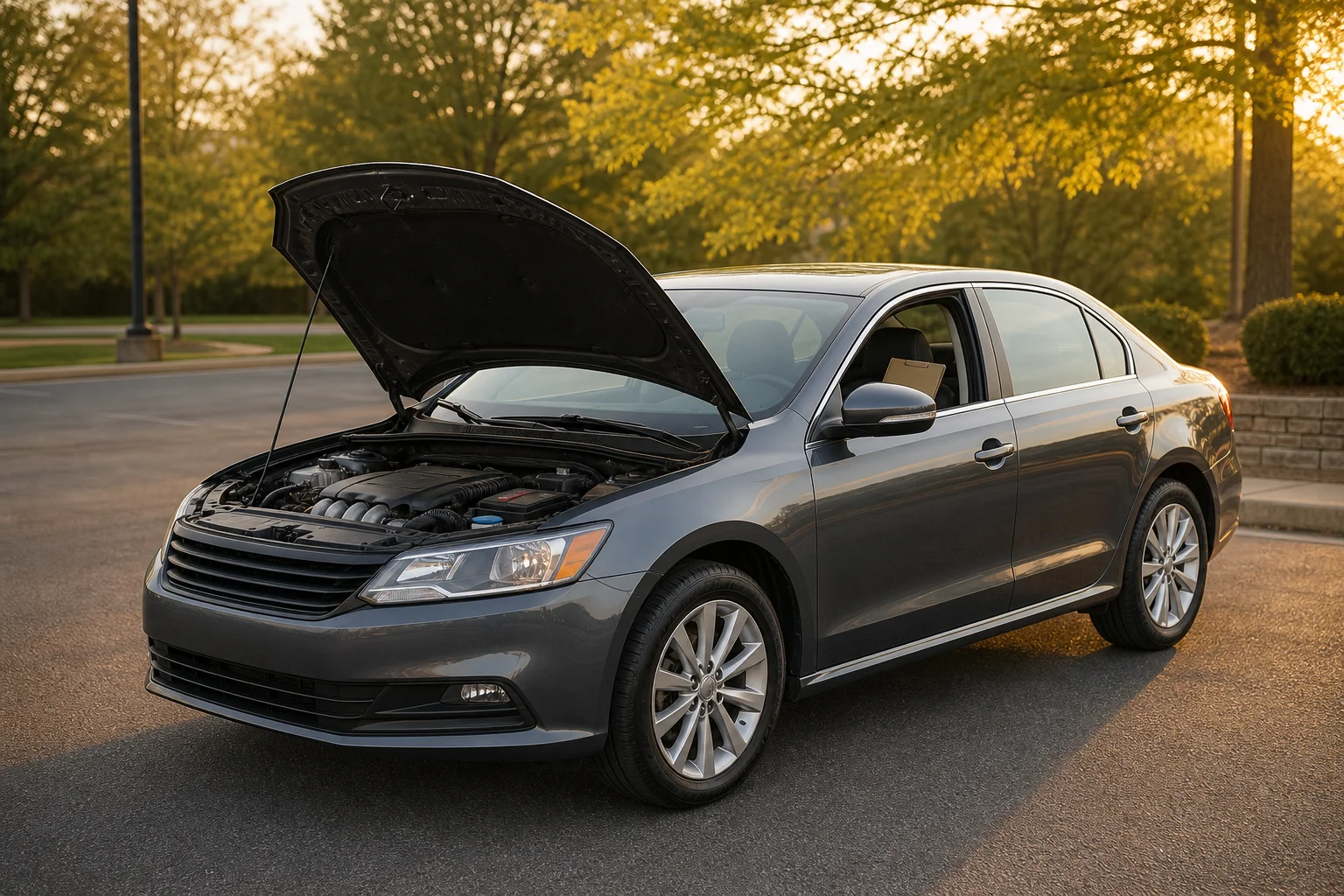
A used car can look clean on the lot and still have unanswered questions under the hood. Checking the used car service history in Frederick MD helps you understand what has been maintained, what may be due soon, and which details deserve a closer look before you commit.
Records are useful, but they are only one part of a sound buying decision. This guide explains how to check a used car’s maintenance records, compare them with the vehicle’s condition, and ask clear questions when you shop around Frederick, Urbana, Middletown, Hagerstown, and Montgomery County.
Key takeaways
- Ask for dated service invoices or a maintenance log, then compare mileage and work performed with the vehicle’s odometer.
- A vehicle history report can reveal reported accidents, title events, and some service entries, but it may not include every repair.
- Look for evidence of routine maintenance as well as major repairs, and check whether upcoming service is due.
- Gaps in records are a reason to investigate, not automatic proof that a car was neglected.
- Pair paperwork with a careful test drive and, when appropriate, an independent pre-purchase inspection.
What a service history can—and cannot—tell you
A service history is a timeline of work performed on a vehicle. It may include oil and filter changes, tire rotations, brake repairs, battery replacement, inspections, and larger engine or transmission work. The most helpful records show the date, mileage, service provider, and specific work completed.
That timeline can help you spot patterns. For example, regular oil changes at sensible intervals are reassuring, while repeated visits for the same warning light may prompt follow-up questions. A recent timing-belt replacement, where applicable, could also affect what maintenance you should budget for next.
Still, no report or folder proves that a car is problem-free. Shops may not report every visit to a commercial database, and owners who did their own maintenance may have limited paperwork. Conversely, a long list of entries does not guarantee that every repair was done correctly or that the vehicle has no current issues.
Think of records as evidence to weigh alongside the car’s condition, a road test, and an inspection. A missing receipt is less concerning when other details make sense; conflicting mileage or unexplained major repairs deserve more attention.
How to check a used car’s maintenance records
Start by asking the seller what records are available and whether you can review them before making a decision. Look for original or digital invoices, a maintenance booklet, inspection paperwork, and receipts for parts. If the seller has only a summary, ask whether supporting invoices or service-provider details are available.
- Match the vehicle identity. Confirm that the VIN on the paperwork matches the VIN on the car and the vehicle history report. A mismatch can mean the document belongs to a different vehicle.
- Put entries in date-and-mileage order. Check whether the odometer readings generally increase over time. A typo can happen, but an unexplained drop or a long period with inconsistent readings needs clarification.
- Check routine maintenance against the owner’s manual. Service intervals vary by model, engine, driving conditions, and manufacturer guidance. Compare the documented work with the maintenance schedule for that exact vehicle rather than assuming every car follows the same interval.
- Identify repeated repairs and open questions. Multiple visits for overheating, a check-engine light, transmission concerns, or electrical faults may indicate a recurring issue. Ask what diagnosis was made and whether the repair resolved it.
- Note what may be due next. Tires, brakes, fluids, batteries, and scheduled maintenance can affect near-term ownership costs. Ask for current condition details rather than assuming a recent sale preparation means every item is new.
When paperwork is incomplete, ask whether the previous owner used a dealership, an independent shop, or performed maintenance at home. With the owner’s permission, a service provider may be able to confirm limited information, though privacy policies and record-retention practices vary.
For a vehicle you are seriously considering, an inspection can help connect the paperwork to what is on the car today. A qualified technician may identify visible leaks, worn components, diagnostic codes, or signs that a repair needs further review. Learn what a pre-purchase inspection can cover before arranging one.
Use a vehicle history report as a cross-check
A used car vehicle history report in Frederick can provide useful context, including reported title brands, certain accident records, ownership events, and service entries when those details have been supplied to the reporting provider. Compare the report with the seller’s documents instead of treating either source as complete on its own.
For instance, if the report lists a repair visit that is missing from the folder, ask what work was done and whether an invoice is available. If the folder shows a major repair that does not appear on the report, that is not automatically suspicious; the shop may not have submitted the information.
Pay particular attention to title status, mileage consistency, and reported damage. A history report may not describe the full extent of an accident, and an unreported collision may not appear at all. Look for physical clues such as uneven panel gaps, mismatched paint, unusual tire wear, or warning lights, and have concerns evaluated rather than drawing conclusions from a single clue.
Also check whether the vehicle has open recalls through an appropriate official recall lookup using its VIN. A recall entry is not the same as proof of a mechanical defect in the individual car; ask whether the required remedy has been completed and request documentation when available.
Questions to ask about used car service records
Specific, neutral questions tend to get more useful answers than asking whether a car was “well maintained.” You are trying to understand what is documented, what is uncertain, and what may need attention—not to assume that every gap means something is wrong.
- “Can I review the service invoices or maintenance log, including dates and mileage?”
- “Which maintenance items were completed most recently, and what is due next?”
- “Have there been repeated repairs or warning lights? What was diagnosed and repaired?”
- “Was the vehicle involved in a collision or repaired for body damage? Is there paperwork?”
- “Are there open recalls, and do you have confirmation of completed recall work?”
- “Can I arrange an independent inspection before purchase?”
- “Are there any known issues that are not reflected in the service records?”
Listen for clear, consistent answers and ask for documents that support important claims. A seller may not know every detail about a vehicle’s earlier ownership, so an honest “I don’t have that record” can be more useful than a confident answer without evidence. If the explanation changes or the paperwork conflicts with the car’s condition, pause and investigate.
Read the records in light of the car and your driving
Maintenance needs depend on the vehicle’s age, mileage, design, and use. A car driven mostly on short trips or in stop-and-go traffic may have different wear patterns from one used mainly for highway commuting. In this region, consider how the vehicle was used through seasonal temperature changes and whether its tires, brakes, and battery appear appropriate for current conditions.
For a hybrid or electric vehicle, ask about the high-voltage battery warranty and any available battery-health information, along with routine items such as tires, brakes, and cabin filters. Maintenance schedules differ by model, and a conventional oil-change history does not apply to a fully electric vehicle. Shoppers comparing electrified options can review used electric and hybrid vehicles in Frederick and ask model-specific questions before deciding.
For any vehicle, records should support—not replace—a test drive. Start the car from cold if possible, watch for warning lights, listen for unusual noises, and note how the engine, transmission, steering, brakes, and climate controls behave. A brief drive cannot diagnose every issue, but it can reveal questions to raise before purchase.
When a concern points to a particular system, ask for a clear explanation of what was checked and what remains uncertain. Renn Kirby Frederick Auto’s service department provides a local point of reference for maintenance questions and vehicle care; an inspection should be tailored to the specific car and concern.
Frequently asked questions
Can I check a used car’s service history for free?
Sometimes, but there is no single free source that contains every repair. Ask the seller for invoices and maintenance records, then compare them with any available vehicle history report; coverage depends on which shops and agencies supplied information.
What if a used car has no maintenance records?
No records do not automatically mean the car was poorly maintained, but they leave more uncertainty. Ask about the vehicle’s ownership and maintenance, review its condition, check its history report, and consider an independent inspection before buying.
Does a vehicle history report show every repair?
No, a vehicle history report may omit repairs that were never reported to its data providers. Use it to cross-check available information, not as a substitute for invoices, a physical inspection, or direct questions to the seller.
What service records matter most before buying?
Prioritize records that establish mileage consistency, routine maintenance, major repairs, and work related to current symptoms or safety. The most relevant items depend on the vehicle’s model, age, mileage, and manufacturer maintenance schedule.
Before buying, build a simple timeline from the records, compare it with the vehicle history report, and write down anything that still needs an answer. A complete file is helpful, but a careful review of the evidence—and an inspection when warranted—gives you a more grounded basis for deciding whether a used car fits your needs in Frederick and nearby communities.