
Used EV Battery Health: What to Check Before You Buy
Renn Kirby Frederick Auto
Learn how to assess used EV battery health in Frederick, MD. Check range, charging, battery records, and warranty before choosing your next electric car.
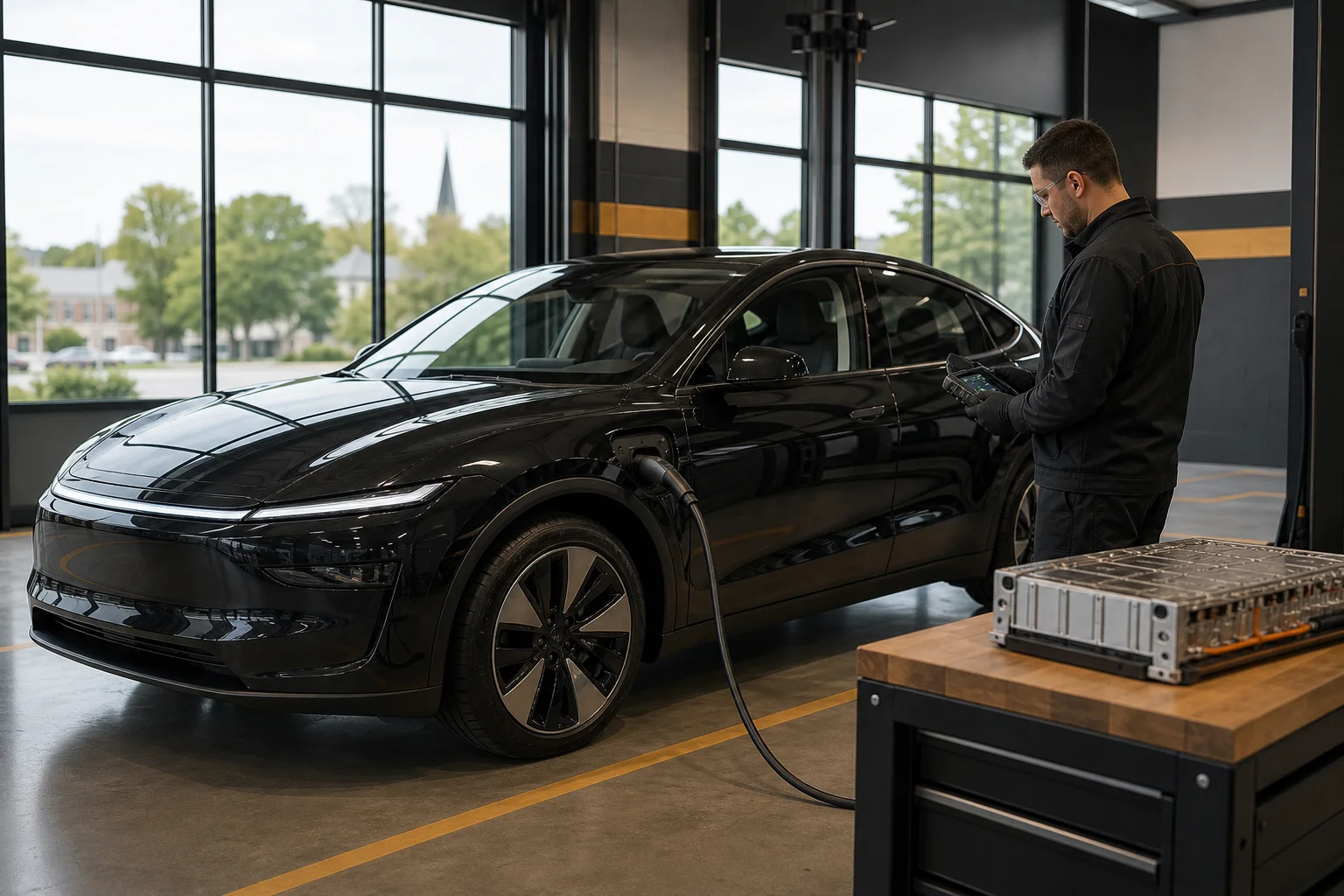
Shopping for a used electric car can make sense—until you start wondering whether its battery will still meet your daily needs. Used EV battery health is not something you can judge from the odometer or a quick glance at the dashboard alone. A careful review of displayed range, charging behavior, battery records, and warranty coverage can help you compare vehicles more confidently in Frederick, MD.
Whether you’re commuting around Frederick, driving from Urbana or Middletown, or making regular trips toward Hagerstown or Montgomery County, the right question is not simply “How much range did it have when new?” It’s “Does this car’s current condition and usable range fit the way I drive?”
Key takeaways
- Compare current range with the vehicle’s original estimate cautiously. Temperature, speed, terrain, climate control, and recent driving can all change the number shown.
- Ask for a battery-health report or diagnostic check. A dashboard estimate is useful context, but it is not a complete battery-capacity test.
- Review charging behavior and service records. Warning messages, interrupted charging, or unexplained range changes deserve follow-up.
- Check the battery warranty by VIN. Coverage terms, mileage limits, and transfer rules vary by manufacturer and model year.
- Match the car’s practical range to your routine. Include winter conditions, highway miles, and access to charging—not just your shortest daily trip.
What used EV battery health means in practical terms
An EV battery gradually loses some of its original capacity over time and use. This process, called battery degradation, is normal; it does not automatically mean a vehicle is faulty. What matters to a buyer is how much usable energy remains, whether the battery behaves consistently, and whether the available range works for the intended trips.
Battery capacity and driving range are related, but they are not the same measurement. Range is an estimate based on factors such as recent driving efficiency, temperature, and accessory use. A car showing fewer miles after a cold morning may not have experienced a sudden change in battery condition; cold weather can temporarily reduce available range and efficiency.
For a Frederick-area shopper, think in terms of your actual routes. A vehicle that comfortably covers local errands and a regular commute may still require more planning for a winter highway trip or a day with several stops. The most useful comparison is between the vehicle’s tested condition and your own charging options, rather than a single advertised range figure.
How to evaluate EV battery degradation before buying
Start with the vehicle’s records and ask the seller what battery information is available. Depending on the make and model, a dealer or qualified EV technician may be able to retrieve diagnostic data, review fault codes, or provide a battery-health assessment. The method and detail available differ by vehicle, so ask what the report actually measures rather than treating every “battery check” as equivalent.
- Request a battery-health report. Ask whether it reports estimated state of health, usable capacity, cell or system faults, or only general diagnostic status. If a formal capacity test is unavailable, find out what checks were performed and what they can—and cannot—confirm.
- Review service and repair history. Look for documentation of battery-system warnings, charging repairs, software updates, or high-voltage component work. A repair record is not automatically a reason to walk away; ask what was repaired, whether the work was completed, and whether the issue returned.
- Check the dashboard for warnings. With the vehicle powered on, look for battery, charging, or high-voltage system alerts. A warning should be explained and diagnosed before purchase, not dismissed based on a verbal assurance.
- Observe a charging session if practical. Confirm that the car connects and begins charging with compatible equipment. Ask whether the charging rate and behavior appear normal for that vehicle and charger; one session alone cannot prove full battery capacity.
- Compare range under similar conditions. Review the displayed estimate alongside the owner’s manual, model information, and the vehicle’s recent use. Avoid drawing a conclusion from a cold-weather estimate or a short test drive by itself.
For an independent assessment, a qualified shop familiar with high-voltage vehicles can inspect the car before you commit. A pre-purchase inspection can help identify broader vehicle concerns; ask in advance whether the inspection includes EV-specific battery diagnostics, since a standard mechanical inspection may not measure battery capacity.
Questions to ask about range, charging, and warranty
Use the same questions for every vehicle you compare. That makes it easier to distinguish a well-documented car from one whose condition is still uncertain.
- What is the current battery-health reading, and who measured it? Ask for the report or documentation, not only a verbal estimate.
- Has the vehicle shown battery or charging warnings? If yes, ask for the diagnostic findings and repair records.
- What charging equipment and connectors does this model use? Confirm compatibility with the charging options you expect to use at home or on the road.
- What battery warranty remains? Verify coverage directly through the manufacturer or an authorized source using the VIN. Confirm the time and mileage limits, what is covered, and whether coverage transfers to a subsequent owner.
- What is included in the sale? Ask whether charging cables or adapters are included and check their condition and compatibility.
- Can the vehicle be inspected independently? A clear answer and reasonable opportunity to verify condition make it easier to make an informed decision.
Warranty language deserves close attention. Battery warranties are not identical across brands, model years, or markets, and a warranty may specify conditions or thresholds for coverage. Do not assume that a battery is covered simply because the vehicle is relatively new; confirm the terms for that exact car.
Renn Kirby Frederick Auto offers used electric and hybrid vehicles in Frederick, MD. When comparing options, ask for the available vehicle history and inspection information, then verify any battery-specific questions that matter to your decision.
How Frederick driving and charging plans affect your choice
Local driving conditions can change what “enough range” means. A short commute around Frederick may use only a portion of a battery’s capacity, while frequent highway driving, steep routes, cold weather, or a full schedule of errands can increase energy use. Heating the cabin in winter can also reduce the distance available on a charge.
Before shopping, write down your typical week: daily miles, longest regular trip, access to home charging, and how often you can charge away from home. If you rent or share parking, check whether installing a home charger is allowed and practical. Public charging can be useful, but your plan should account for charger locations, compatibility, and time—not just the vehicle’s maximum advertised range.
When test-driving, pay attention to how the vehicle feels and how its range estimate responds to your route, but don’t treat a short drive as a definitive battery test. Compare similar models under similar conditions, and consider whether the car has enough margin for cold days and unexpected detours. If your routine often includes longer trips, a model with more usable range may be worth comparing even if your daily mileage is modest.
You can explore the dealership’s current used vehicle inventory and narrow your search to electric or hybrid options that fit your needs. Battery condition, vehicle history, equipment, and price should all be considered together rather than letting one range number decide the purchase.
Signs to pause and investigate further
Some findings call for more information, not an immediate yes or no. A low range estimate could reflect cold weather, recent driving, or battery wear; ask for a diagnostic explanation and compare it with other evidence. Likewise, a prior battery repair may have been completed successfully, but the records should show what happened and what coverage remains.
- Unexplained warning lights or charging faults: Request a diagnosis and written repair details before proceeding.
- Conflicting range or battery claims: Ask how the figures were obtained and whether they refer to estimated range, capacity, or a diagnostic result.
- Missing service information: Lack of records does not prove a problem, but it increases uncertainty. Consider an independent EV-capable inspection.
- Warranty details that cannot be verified: Confirm coverage using the VIN before assigning value to it.
- Range that does not fit your routine: Even a healthy battery may be the wrong match if your regular trips leave too little charging flexibility.
A useful buying decision balances condition, documentation, cost, and convenience. If an inspection identifies a concern, ask what it means for safe operation, likely repair needs, and your expected ownership costs. If the seller cannot answer a battery-specific question, treat that as a reason to verify independently rather than guessing.
Frequently asked questions
How can I check used EV battery health before buying?
Ask for a battery-health report or EV-specific diagnostic assessment, review service records, and check for battery or charging warnings. Also verify the warranty and compare the vehicle’s range estimate with your driving needs; no single dashboard number proves battery capacity.
Does a lower range estimate always mean the battery is degraded?
No. Temperature, recent driving, speed, terrain, and climate-control use can all affect the estimate. If the range seems unusually low, request diagnostic information and compare it with the vehicle’s history and conditions before deciding what it means.
Can a regular pre-purchase inspection test an EV battery?
Not necessarily. A general inspection can assess many important vehicle systems, but battery-capacity testing and high-voltage diagnostics may require EV-specific tools and expertise. Ask the inspection provider exactly what is included before scheduling.
What should I check on a used electric car battery warranty?
Confirm the remaining time and mileage, covered components, applicable coverage conditions, and whether the warranty transfers to you. Use the VIN to verify the terms with the manufacturer or an authorized source rather than relying on a general model-year description.
Buying a used EV is easier when you separate normal range variation from evidence of a battery problem. Request documentation, verify warranty coverage, and judge the car against your real Frederick-area driving and charging routine. With those checks in hand, you can compare used electric vehicles more clearly and choose one that fits both your budget and your day-to-day life.