
Used Trucks for Sale Frederick MD: Check Towing Capacity
Renn Kirby Frederick Auto
Shopping used trucks for sale Frederick MD? Learn how to verify towing capacity, payload, hitch ratings, and condition before you buy.
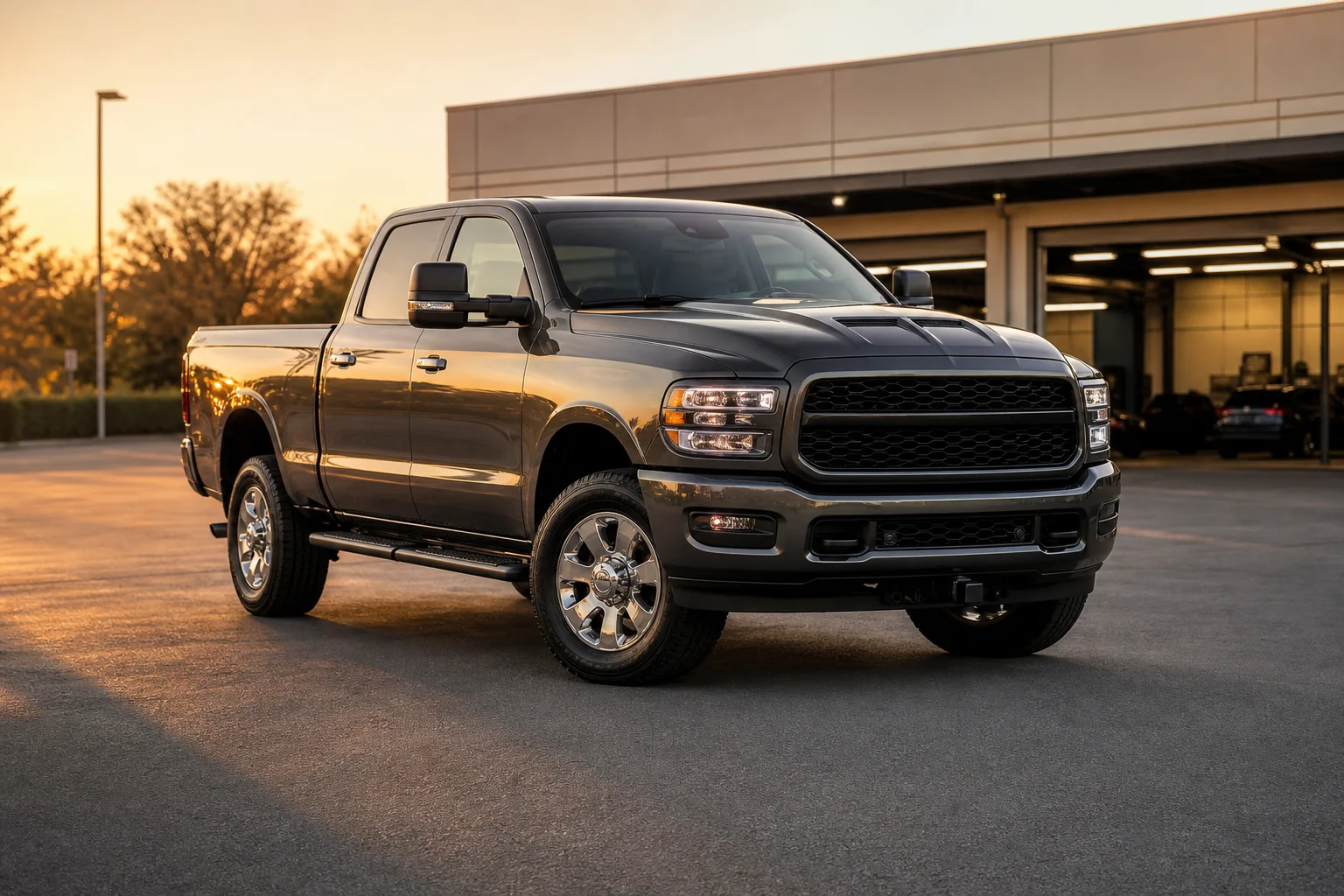
A truck’s advertised towing number can look reassuring—until you add passengers, cargo, a trailer, and the equipment installed by a previous owner. If you’re comparing used trucks for sale Frederick MD, the right question is not simply “How much can it tow?” It’s “Can this specific truck safely handle my loaded trailer and everything I’ll carry?”
This practical guide explains how to verify used pickup towing capacity, read the vehicle’s ratings, and inspect the parts that matter before buying. Whether you’re hauling a small utility trailer around Frederick County or towing a camper toward the mountains, a few checks can help you avoid choosing a truck that is undersized—or paying for capacity you won’t use.
Key takeaways
- Verify the exact truck configuration. Towing capacity varies by model year, engine, cab, bed, drivetrain, axle ratio, and factory tow equipment.
- Check payload as well as towing capacity. Trailer tongue weight, passengers, cargo, and accessories all use the truck’s payload allowance.
- Use the door-jamb and hitch labels. The truck’s certification label and receiver rating help confirm limits; a brochure’s maximum figure is not enough.
- Inspect towing-related components. Look closely at the frame, hitch, tires, brakes, suspension, wiring, and signs of hard use or poor repairs.
- Match the truck to your real load. Use the trailer’s loaded weight—not its empty or advertised dry weight—and leave a sensible margin.
Start with the trailer and the truck’s exact configuration
Before comparing trucks, write down what you expect to tow. Find the trailer’s gross vehicle weight rating (GVWR), which is its maximum permitted loaded weight, and estimate its actual loaded weight for your use. Dry weight can be misleading: water, propane, batteries, tools, camping gear, or building materials can add substantial weight.
Then identify the truck you’re considering by year, trim, engine, cab, bed length, drivetrain, and axle configuration. A model name alone does not establish towing capacity. Two trucks that look alike on the lot may have different ratings because one has a different engine, rear axle ratio, wheelbase, or factory tow package.
Use the owner’s manual and manufacturer towing guide for that model year and configuration. Compare those figures with the certification label on the driver’s door jamb and the label on the receiver hitch. If equipment has been changed or labels are missing, treat the rating as unconfirmed until it can be verified.
If you’re comparing local options, review the available used trucks in Frederick and make a shortlist by configuration—not just by advertised maximum capacity.
Understand towing capacity, payload, and the other limits
Towing capacity is only one limit. A truck also has a gross vehicle weight rating (GVWR), the maximum allowed weight of the truck and everything in it; a gross combined weight rating (GCWR), the maximum combined weight of truck and trailer; and front and rear axle ratings. The truck must stay within all applicable limits when loaded.
Payload is especially easy to overlook. It is the weight the truck can carry, including occupants, items in the cab and bed, aftermarket equipment, and the trailer’s tongue weight. A trailer may fall below the truck’s tow rating but still push the truck over its payload or rear-axle limit.
For a conventional bumper-pull trailer, tongue weight is commonly estimated at roughly 10–15% of the loaded trailer weight, but the trailer maker’s guidance and actual loaded setup matter. For example, a 6,000-pound loaded trailer could place about 600–900 pounds on the hitch. Add passengers, cargo, a tool box, and a heavy hitch, and the available payload can disappear quickly.
Check the payload figure on the specific truck’s tire-and-loading information label, if present, and confirm the relevant ratings in the manual or manufacturer documentation. Do not assume every truck of the same model has identical payload. A larger cab, four-wheel drive, heavy options, or added equipment can reduce what remains for people and gear.
How to choose a used truck for towing your actual load
The best choice is the truck that meets your routine needs within its ratings, not necessarily the one with the biggest number in an advertisement. Start with your heaviest realistic trip: trailer loaded for use, all expected passengers, cargo, and accessories. If the load is close to a limit, confirm the numbers carefully and consider a properly rated truck with more capacity.
- Weigh or estimate the loaded trailer. Use a public scale or reliable manufacturer information when possible. Include cargo, fluids, and equipment.
- Estimate tongue or pin weight. Use the trailer manufacturer’s recommendations and account for the weight transferred to the truck.
- Add truck occupants and cargo. Include bed cargo, cab items, hitch equipment, and accessories such as a cap or toolbox.
- Confirm every rating. Check tow rating, payload, GVWR, GCWR, axle ratings, tire capacity, and hitch limits against the planned load.
- Consider the route and frequency. Regular towing, steep grades, long distances, or hot-weather trips call for more careful planning than occasional short hauls.
Think about how you’ll use the truck when it is not towing, too. A heavy-duty model may offer useful capacity, but it can have a firmer ride, larger tires, and higher operating costs. A lighter-duty pickup may be easier to live with if your trailer is modest and the verified ratings leave adequate room.
For some buyers, a hybrid or electric vehicle may suit everyday driving, but towing can affect range and charging plans. Compare the vehicle’s specific towing rating and your route needs before deciding; browse used electric and hybrid vehicles if you’re considering those options for other parts of your driving routine.
Used truck inspection checklist: what to examine before buying
A used truck can have the right factory rating and still be a poor towing choice if its condition is compromised. Look for evidence of how it was used, and have concerns checked by a qualified technician. A test drive without a trailer cannot prove towing performance, but it can reveal warning signs.
- Frame and hitch: Check for cracks, bends, heavy corrosion, fresh undercoating that could conceal repairs, and non-factory drilling or welding. Confirm the receiver’s rating and inspect the ball mount and safety-chain points.
- Suspension and tires: Look for sagging, uneven ride height, damaged leaf springs, worn shocks, mismatched tires, and uneven tread wear. Confirm tire load ratings and pressure requirements.
- Brakes and steering: During a safe test drive, note pulling, vibration, unusual noises, a soft pedal, or steering looseness. Ask about brake service and inspect for uneven wear.
- Engine and transmission: Check for leaks, warning lights, overheating history, delayed shifts, slipping, or harsh engagement. Towing places extra demands on cooling and drivetrain components.
- Wiring and equipment: Test the trailer connector, brake controller, lights, and any factory tow features. Verify that installed equipment is compatible and properly fitted.
- Records and modifications: Ask about prior trailer use, maintenance, accidents, lift kits, tire changes, and drivetrain repairs. Modifications can affect handling, clearance, and component loads.
For an independent assessment, a qualified mechanic can examine the truck’s condition before purchase. Renn Kirby Frederick Auto also provides a pre-purchase inspection option; clarify what the inspection covers and whether it includes the towing equipment you want evaluated. No inspection can guarantee future reliability, but it can help surface issues that a quick walk-around may miss.
Frederick-area towing: plan for the whole trip
Local use matters. A truck that feels adequate on a short, flat drive may behave differently with a loaded trailer on a longer trip, in traffic, or on a grade. Consider where you’ll tow from Frederick, how often you’ll travel, and whether your route includes steep approaches, frequent stops, or tight parking.
Before towing, confirm that the trailer’s brakes, lights, tires, and safety chains are in good order and that the truck has the required equipment for the trailer. Follow the truck and trailer manufacturers’ setup instructions, including mirror visibility, weight distribution, and brake-controller settings where applicable. If you’re new to towing, practice in a low-traffic area before taking a loaded trailer onto busy roads.
Also account for ownership costs beyond the purchase price. Towing can accelerate wear on tires, brakes, and drivetrain components, so ask about maintenance history and budget for ongoing service. You can review the dealership’s service department information when considering how you’ll maintain a truck after purchase.
Frequently asked questions
How do I find the towing capacity of a used pickup?
Identify the truck’s model year and exact configuration, then check the owner’s manual or manufacturer towing guide for that combination. Confirm the receiver-hitch rating and compare the planned load with payload, GVWR, GCWR, axle, and tire limits; a model’s advertised maximum may not apply to the specific truck.
Is towing capacity the same as payload?
No. Towing capacity is the maximum trailer weight under specified conditions, while payload is what the truck can carry. Passengers, bed cargo, accessories, and trailer tongue weight all count against payload, so a truck can be under its tow rating but over its payload limit.
Can I tow more if I install a stronger hitch?
Not necessarily. A higher-rated hitch does not increase the truck’s factory towing, payload, axle, or combined-weight ratings. The allowable setup is limited by the lowest applicable rating among the truck, hitch, tires, and towing equipment.
What should I ask when buying a used truck that may have towed regularly?
Ask what it towed, how often, and whether the owner has maintenance or repair records. Have the frame, hitch, brakes, suspension, tires, cooling system, transmission, and trailer wiring inspected, and verify that any modifications are suitable for the truck’s intended use.
Choosing a used pickup for towing comes down to matching a verified truck configuration and its condition to your fully loaded trailer—not relying on a headline number. Bring your trailer details, check every relevant rating, and use a careful inspection to compare your options. With those steps, you can shop for a truck that fits both the work ahead and everyday driving around Frederick, Urbana, Middletown, Hagerstown, and Montgomery County.