
Used Trucks for Sale Frederick MD: Compare Towing and Payload
Renn Kirby Frederick Auto
Used Trucks for Sale Frederick MD: Compare Towing and Payload
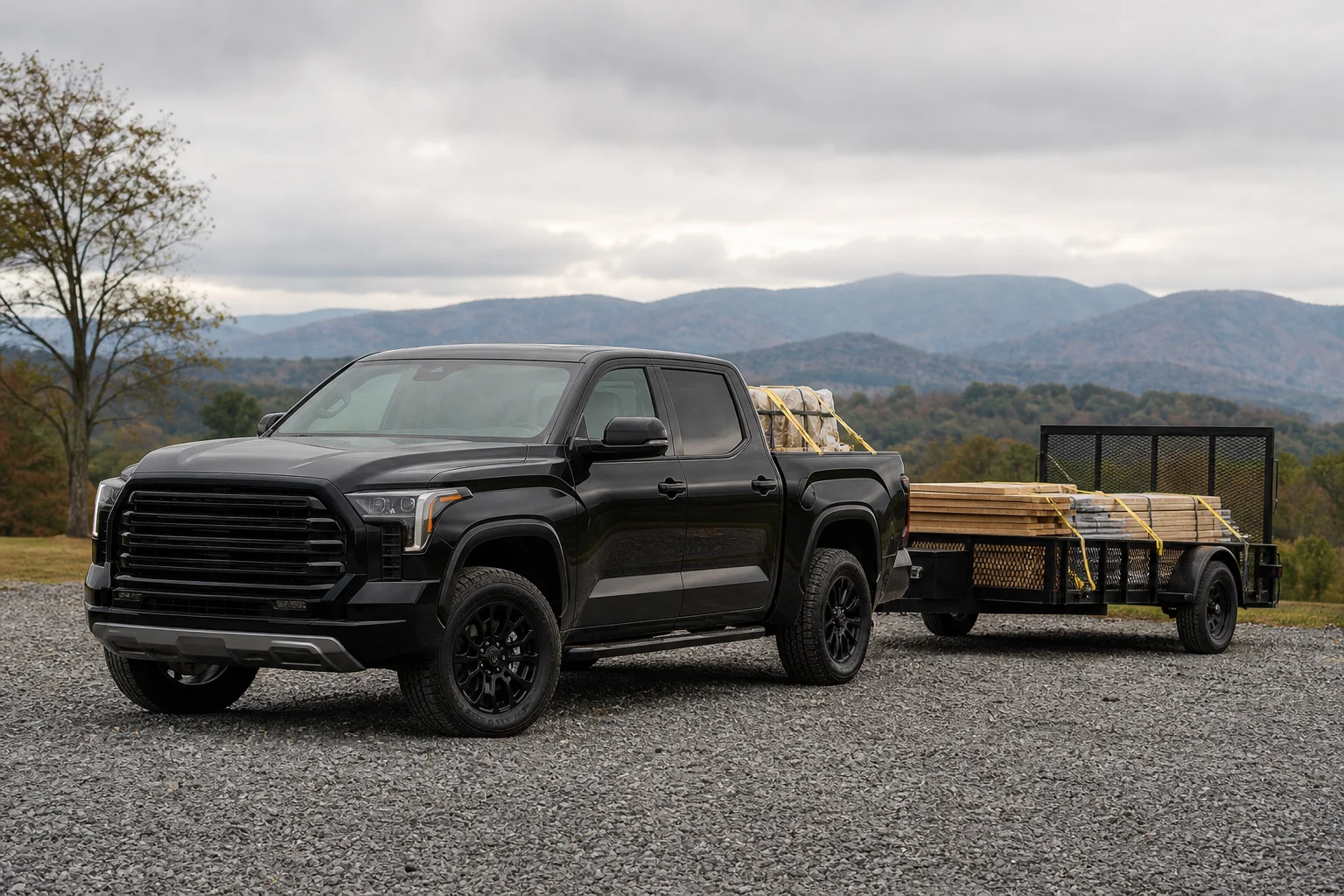
Shopping for a truck means looking beyond the biggest towing number on a window sticker. The right choice depends on what you plan to tow, how much you’ll carry in the cab and bed, and the specific truck’s equipment. This guide to used trucks for sale Frederick MD explains how to compare towing capacity and payload so you can narrow your options with confidence before visiting a lot.
Key takeaways
- Towing capacity is the maximum trailer weight a properly equipped truck can tow; payload is the weight the truck itself can carry.
- Use the exact truck’s certification label, owner’s manual, and towing guide—not a model’s best-case maximum—to verify capacity.
- Passengers, cargo, accessories, and trailer tongue weight all use payload capacity.
- Match the truck to your heaviest realistic load, then leave a practical margin rather than shopping by the highest advertised number.
- When comparing used trucks in Frederick, Maryland, check configuration, condition, and equipment as carefully as price and mileage.
Towing capacity and payload answer different questions
Towing capacity tells you how much trailer weight the truck may tow under the manufacturer’s stated conditions. Payload tells you how much weight the truck may carry, including people and cargo inside it, items in the bed, and the portion of a trailer’s weight pressing down on the hitch.
That distinction matters because a truck can have a high tow rating but limited payload for your particular setup. For example, a travel trailer may be within the truck’s tow rating, yet its tongue weight—plus passengers, a toolbox, and gear—could push the truck over its payload limit. The numbers must work together.
- Towing capacity: trailer weight, subject to the truck’s configuration and towing equipment.
- Payload capacity: occupants, cargo, accessories, and hitch or trailer load carried by the truck.
- Gross vehicle weight rating (GVWR): the maximum permitted weight of the loaded truck itself.
- Gross combined weight rating (GCWR): the manufacturer’s limit for the loaded truck and trailer together.
Do not assume that a truck’s advertised maximum applies to every version of that model. Cab style, bed length, engine, drivetrain, axle ratio, trim, and installed options can change the ratings. A four-wheel-drive crew cab with a heavier trim package, for instance, may have different available payload and towing figures than a lighter two-wheel-drive version.
How to verify the capacity of a specific used truck
Start with the truck in front of you, not a general model-year specification page. Find the tire and loading information label on the driver-side door area. It lists the maximum combined weight of occupants and cargo the vehicle can carry; that figure is a useful starting point for payload on that specific truck.
Then confirm the truck’s towing rating using the manufacturer’s towing guide or owner’s manual for the correct model year and configuration. If the equipment is unclear, ask the seller to help identify the engine, cab, bed, drivetrain, axle ratio, and factory towing package. A hitch receiver alone does not prove that the truck has every component or rating associated with a factory tow package.
- Identify the exact configuration. Record the model year, engine, cab and bed, drivetrain, and relevant packages.
- Read the door label. Note the truck’s stated occupant-and-cargo limit and compare it with your expected load.
- Check the manufacturer’s towing information. Match the truck’s configuration to the correct rating, rather than relying on a broad model range.
- Account for the whole load. Include passengers, bed cargo, aftermarket accessories, hitch equipment, and trailer tongue weight.
- Inspect condition and equipment. Look for signs of heavy use, tire concerns, suspension wear, and any changes that may affect how the truck performs.
For a used truck, condition deserves attention alongside the published numbers. A truck that has regularly hauled heavy loads may show wear in its tires, brakes, suspension, hitch area, or drivetrain. A professional vehicle inspection can help identify concerns, but an inspection does not change the manufacturer’s capacity ratings.
Calculate your real-world payload before comparing trucks
Write down what the truck will carry on a typical trip and on the heaviest trip you expect. Include everyone who rides in the truck, not just the driver. Add tools, sports equipment, building materials, bed covers, racks, running boards, and other accessories; installed equipment contributes weight even when it is not loaded for a particular trip.
If you tow, include the trailer’s tongue weight in the payload calculation. The exact figure depends on the trailer and how it is loaded, so use the trailer manufacturer’s guidance and verify the loaded setup. A weight-distributing hitch can affect how loads are distributed, but it does not give you permission to exceed the truck’s ratings.
A simple planning worksheet can make comparisons easier:
- People in the truck: approximate combined weight
- Cab and bed cargo: tools, luggage, supplies, and equipment
- Permanent or removable accessories: racks, caps, steps, or toolboxes
- Tow equipment and trailer load carried at the hitch
- Payload figure on the truck’s door label
Subtract your expected load from the label’s occupant-and-cargo limit to see how much room remains. This is a planning check, not a substitute for weighing a loaded vehicle or following the manufacturer’s instructions. If your use is close to a limit, verify the actual weights and get qualified guidance before towing.
Compare trucks by the job, not just the maximum number
Make a short list of what you need the truck to do: tow a boat or camper, carry landscaping supplies, transport tools, or handle a mix of family and work use. Then compare candidates against that job. A truck with a lower maximum tow rating may be the more suitable choice if it has enough capacity for your actual trailer and offers the cab, bed, and everyday comfort you need.
For example, a buyer hauling a small utility trailer occasionally may value a manageable size, a useful bed, and a clean maintenance history more than a heavy-duty configuration. Someone regularly towing a large camper should focus on the exact truck-and-trailer ratings, loaded tongue weight, passenger count, and the truck’s condition. Neither buyer should choose from a model’s headline maximum alone.
When you compare used trucks Frederick Maryland, use the same checklist for every candidate:
- Does the specific truck’s verified towing capacity cover your loaded trailer?
- Does its payload leave room for passengers, cargo, accessories, and hitch load?
- Are the cab, bed, drivetrain, and towing equipment right for your routine?
- Do the tires, brakes, suspension, hitch, and service history appear appropriate for its past use?
- Does the truck fit your budget after considering ownership needs and any planned equipment?
Aftermarket changes deserve a closer look. Lift kits, larger tires, and other modifications can affect handling, ride, and component wear; they do not automatically increase a truck’s legal or manufacturer-rated capacity. If you are considering a modified truck, ask what was changed and have its condition assessed. You can also review available truck accessories and lift-kit options before deciding what you actually need.
Shop local inventory with a clear comparison plan
Frederick-area shoppers can use the same process whether they are coming from Urbana, Middletown, Hagerstown, or Montgomery County: define the job, verify the individual truck’s ratings, and compare condition and equipment. A transparent price makes it easier to evaluate the vehicle itself, but it does not replace checking whether the truck fits your towing and payload needs.
Browse used trucks available in Frederick, Maryland and note the details you need to confirm for each one. If a listing does not show the exact configuration or capacity, treat that as a question to resolve—not a reason to assume the highest rating for that model applies.
Bring your trailer information, a rough passenger-and-cargo estimate, and a list of must-have features when you compare trucks in person. That makes it easier to have a focused conversation about the truck’s equipment and whether its ratings align with your plans.
Frequently asked questions
How do I find the payload capacity of a used truck?
Check the tire and loading information label on the driver-side door area for the truck’s occupant-and-cargo limit. Then account for passengers, cargo, accessories, and trailer tongue weight; the model’s published maximum may not match the specific truck.
Is towing capacity the same as payload capacity?
No. Towing capacity concerns the trailer the truck may tow, while payload concerns weight carried by the truck. Trailer tongue weight also uses payload, so a truck must have enough capacity for both the trailer and the load in the cab and bed.
Can I use a truck’s maximum advertised towing number to choose a trailer?
Not by itself. Maximum ratings often apply only to a particular configuration and conditions, so verify the specific truck’s equipment and ratings, then account for the loaded trailer, passengers, cargo, and hitch load.
Do aftermarket upgrades increase a used truck’s towing capacity?
Not automatically. Upgrades may change how a truck rides or handles, but they do not necessarily change its manufacturer ratings or legal limits. Confirm the truck’s original specifications and have modifications evaluated before relying on them for towing.
The best used truck is not necessarily the one with the largest number on its specification sheet; it is the one whose verified towing and payload capacities suit your real load, with condition and equipment you can feel good about. Use the door label and manufacturer information to compare candidates, and take time to confirm any details that are unclear before choosing a truck in Frederick, Maryland.